Wall Art Tips — Calm & Intentional Living
Wall Art Tip #4: How to Use Calm Wall Art to Create a Peaceful, Balanced Home
October 11, 2025
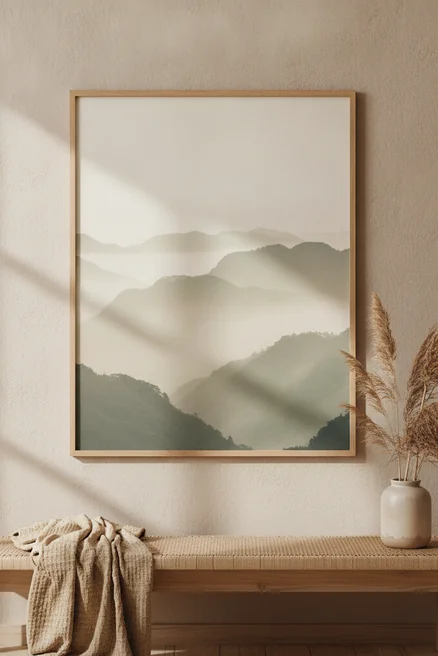
Creating a peaceful atmosphere in your home goes far beyond choosing the right furniture. The art you hang on your walls can genuinely influence how a room feels and how you move through it. That’s why calm wall art is one of the most powerful tools in intentional interior design.
Why Calm Wall Art Makes a Difference
In a world that moves fast and demands constant attention, the spaces we return to should offer a quiet sense of retreat. Calm wall art does exactly that. Through neutral tones, minimal compositions, and nature-based imagery, it introduces a layer of softness to any room—whether it’s a bedroom, hallway, or workspace.
Unlike loud or chaotic artwork, calm art invites stillness. It doesn’t scream for attention—it gently enhances the room’s existing energy. This subtlety is exactly what makes it so effective in Japandi, Scandinavian, and modern minimalist interiors.
Key Elements of Calm Wall Art
When choosing calm wall art, look for these 3 core characteristics:
1. Neutral & Earth-Based Color Palettes
Beige, cream, sage, charcoal, pale sand, soft blues—these tones reduce visual noise and pair effortlessly with natural materials like wood, linen, and stone.
2. Minimalist Composition
Whether it’s a quiet forest, an abstract horizon, or a solitary stone on textured paper, calm wall art tends to leave space. This negative space lets the eye rest and keeps the room feeling open.
3. Nature-Inspired Motifs
From foggy landscapes to still water reflections or stacked stones, art that reflects natural harmony supports a feeling of peace. These motifs are widely associated with calm and mirror the balance we find in outdoor environments.
Where to Use Calm Wall Art in Your Home
1. Entryway
Set the tone from the moment someone steps inside. Choose a single large piece or a clean set of 3 in soft tones.
2. Living Room
Create a focal wall behind the sofa or above a console. Balance it with indoor plants or ceramic decor.
3. Bedroom
Perfect for placing above the bed or across from it. Horizontal landscapes or moonlight-inspired compositions work especially well.
4. Home Office or Studio
Avoid bold distractions. Instead, go for muted forms or abstract nature that supports focus and flow.
5. Meditation or Yoga Corner
Here, calm wall art becomes more than decor—it accompanies your wellness practice and invites grounding.
The prints in our Zen & Balance collection are chosen with exactly these spaces in mind — and for wide, quiet horizons, the Minimal Landscapes collection is a natural fit above beds and sofas.
Styling Tips for Calm Wall Art
- Use thin natural wood or black frames to maintain a clean border. Avoid ornate or heavy finishes
- Group artworks in odd numbers (1, 3 or 5) for organic balance
- Complement the art with other calm textures: soft fabric, matte ceramics, woven baskets, smooth lighting
- Leave breathing room around each piece. Let the space be part of the art
Final Thought: More Than Decoration
Calm wall art isn’t just something nice to look at. It’s a quiet tool for mindfulness—a daily reminder to slow down, breathe, and live intentionally. Choosing art that reflects the peace you want to feel helps shape the energy of your entire home.
Whether you’re designing a Japandi-style retreat, a quiet office corner, or simply refreshing a room, calm wall art gives your walls a voice that says: “You are safe here. You can let go.”
For a deeper look at how interior spaces relate to well-being, see Designing for Well-Being: The Role of Interior Architecture in Mental Health (Marymount University).